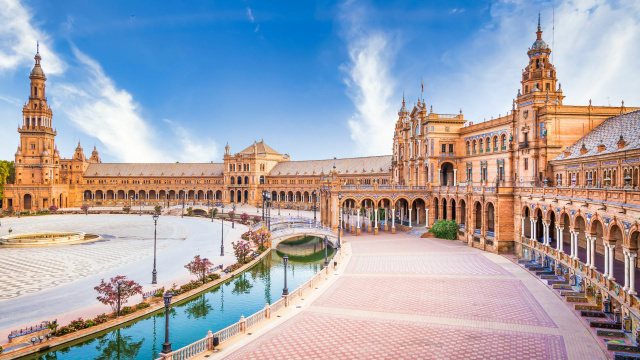
Plaza de España
One of the most recognizable architectural complexes in Seville and likely the world, given that it has served as the setting for several films.
Designed as the main building for the 1929 Ibero-American Exposition, its semicircular layout (spanning 200 meters in diameter) symbolizes Spain embracing its former overseas territories in the Americas, facing directly toward the Guadalquivir River as a gateway to the Atlantic. It features a Regionalist style that combines marble, iron, ceramic, and brick, giving it a unique appearance. Along the perimeter, there are 48 tile-decorated benches, each representing a Spanish province and depicting a significant historical event. A half-kilometer-long canal runs in front of the palace, offering the opportunity for boat rides, and the entire complex is crowned at its center by a large, monumental fountain.
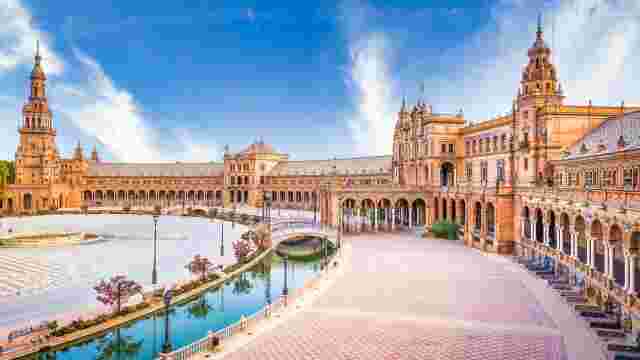
Plaza de España
One of the most recognizable architectural complexes in Seville and likely the world, given that it has served as the setting for several films.
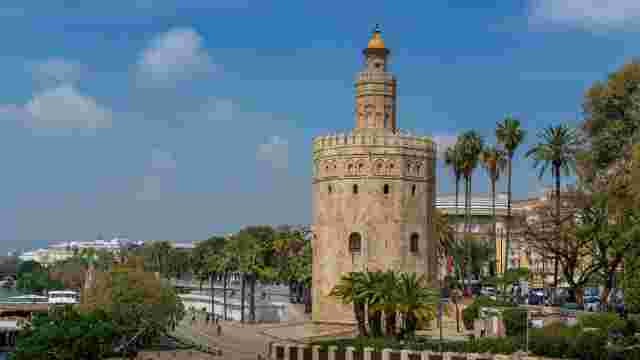
Torre del Oro
On the banks of the Guadalquivir River stands the beautiful Torre del Oro, the ancient defensive tower that protected the port of Islamic Seville.
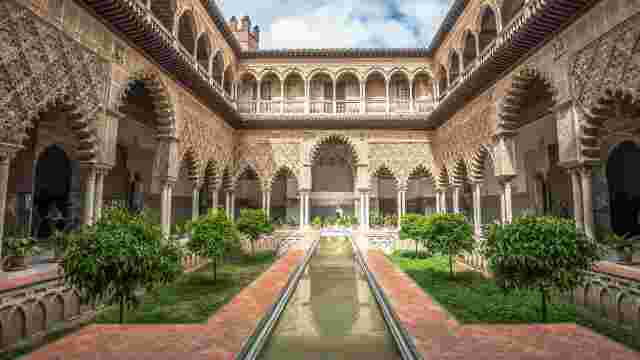
Real Alcázar
In the heart of Seville's historic center, facing the Cathedral, lies one of the world's most dazzling palace complexes: the Real Alcázar of Seville.
Giralda
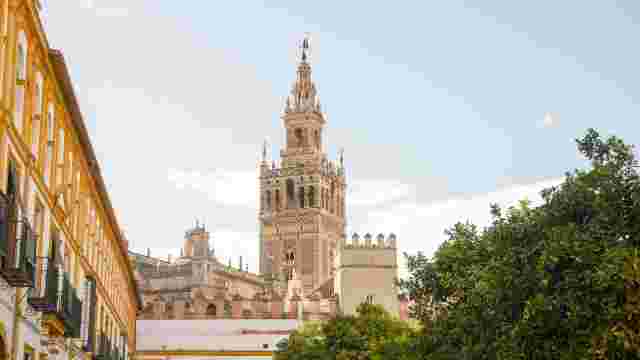
The Giralda is the bell tower of the Cathedral and was built upon the remains of the former minaret of what was once the mosque of Seville.
Triana Bridge
Sevilla Cathedral
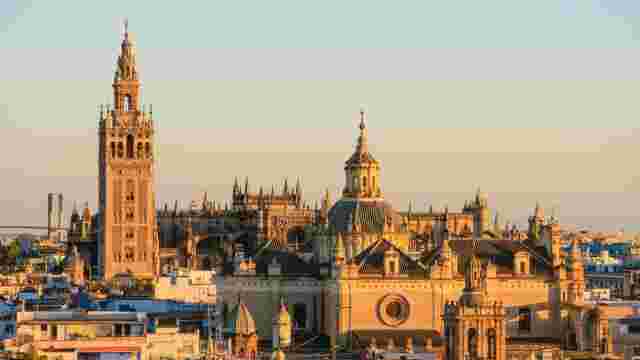
Seville Cathedral is the largest Gothic church in the world and one of the largest churches in Christendom.